
True Greatness
Great Vigil of Easter, Year A
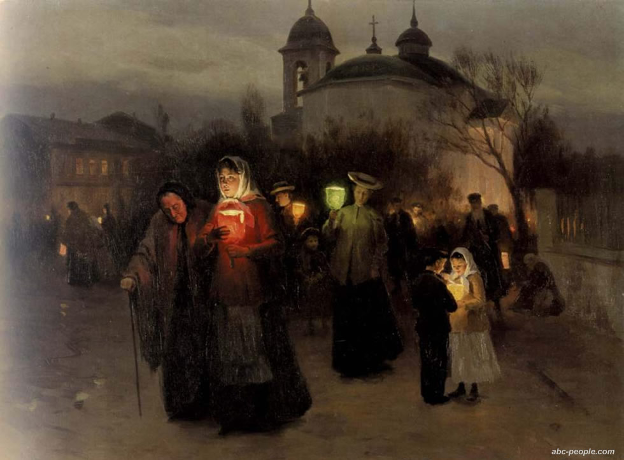
Maundy Thursday, Mykola Pymonenko
In my tradition, the Easter Vigil begins in the quiet waiting of Holy Saturday. The church has been dark and spare since the altar was stripped at the end of the Maundy Thursday service. The first part of the service re-introduces light as the deacon, chanting the Exsultet, carries the Paschal Candle in from the back of the church reminding us that this is the night when Christ broke the bonds of death and rose victorious from the grave.
We then hear a variety of lessons from the Old Testament. According to the Book of Common Prayer, the final reading of this part of the service is Zeph. 3:10-20. At the beginning of Zeph. 3, just before this passage begins, we read that the Lord speaks to a broken, deceived, and deceptive Jerusalem. The city has placed its faith in reckless, faithless leaders. Those leaders have stolen the resources of the city for their own benefit; they have “done violence to the law” (3:4). As a result, they have come under God’s judgment. The result is exile for some, life in the ruins of a city for others.
The reading then begins with God noting that the renewal of Jerusalem will occur without those proud and arrogant leaders that led the people into disaster. The remnant of Jerusalem will be humble and lowly. “They will do no wrong and utter no lies”
The real heart of this passage begins at 3:14, “Sing aloud, O daughter Zion; shout, O Israel!” God has renewed God’s city and people; joyful praise is the only possible response. Out of disaster God has brought forth new life.
“And I will save the lame
and gather the outcast,
and I will change their shame into praise
and renown in all the earth.
At that time I will bring you in,
at the time when I gather you together;
for I will make you renowned and praised
among all the peoples of the earth,”
In some respects, this account of Israel’s and Jerusalem’s restoration is similar to other texts found in the prophets in which God acts to reverse the failures, sins, and downfall of the people of God, bringing about restoration, redemption and peace.
Maybe this year, however, there are some elements that resonate more than in the past. The restored citizens of Jerusalem are marked by their humility and honesty. I assume this means not only that they speak the truth as they know it, but that they care about truthfulness.
The transformations narrated here are particularly related to shame and renown, disaster and renewal. Even in the recent past, believers may have felt some measure of confidence in the way they used these terms, of how and to what they were applied. Now the application of terms like shame and greatness are hotly contested within and outside churches. Who and what are counted as great say much about how one views God and the world. Of course, in any age the people of God can end up longing for, prizing and aspiring to things that only appear to be worthy or great.
Whether we have only dipped our toes into Lent or fully immersed ourselves in a holy Lent, I hope we have come to know the destabilizing, decentering that begins on Ash Wednesday. This decentering and instability is ratcheted up as we humble ourselves in washing each other’s’ feet, and embracing the self-conscious humility of having our own feet washed. When we contemplate the stripped altar, we can also wonder if the reappointed altar will lead to the worship of God or misdirect us towards lesser things, false greatness. Will the sorrow of Good Friday lead us to examine ourselves more truthfully, to depend on God’s grace more wholeheartedly?
In all of these ways we begin the Easter vigil unstable, holding our certainties lightly. As the readings culminate with this passage from Zephaniah and its call to rejoice that God is making us a people “of renown,” we must remember that this “renown” is not due to our inherent greatness or even our past successes. It comes about in the light of the horrific state sponsored death of an innocent person whose death and resurrection leads to the defeat of death. It is God’s work and our renown is only due to God’s redeeming love. We should be joyful, but not proud.
The collect that follows the reading from Zeph 3 pulls this together nicely. It concludes, “Let the whole world see and know that things which were cast down are being raised up, and things which had grown old are being made new, and that all things are being brought to their perfection by him through whom all things were made, Jesus Christ, our Lord.”